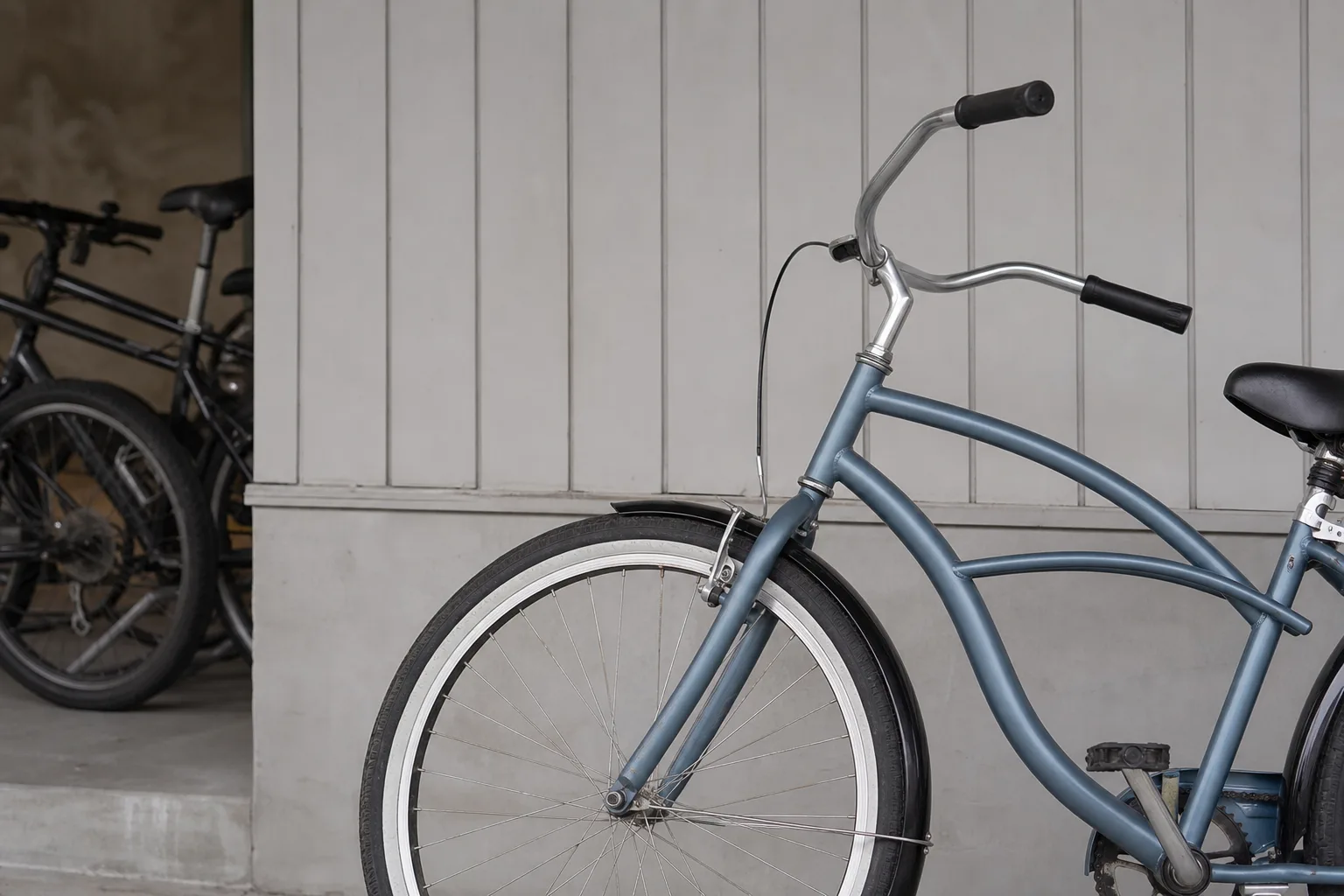
One rider's working-out of a flat-terrain bicycle bought for trips of two or three miles, kept here so the next person can skip the guessing. Nothing on this site is for sale.
A cruiser bought off the sales floor arrives at your house in a configuration nobody chose deliberately. The saddle sits where it sat during assembly, the bars are at whatever angle the clamp happened to close on, and the tires hold whatever pressure they held in the box, minus a few weeks of slow leakage. Ride it around the block in that state and the bike will feel heavy, vague in the steering, and oddly tiring in the thighs. Almost none of that is the frame. Here is the order a careful reader should check things.
1. The saddle is set for standing over, not for pedaling
Most cruisers leave the shop with the saddle low enough that a rider can plant both feet flat while seated, which feels reassuring at a standstill and wrecks the pedal stroke immediately. With the knee never straightening, the quadriceps do work the whole leg should share, and a ten-minute ride produces a specific burning ache above the kneecap. Raise the saddle until the knee holds a slight bend at the bottom of the stroke, roughly the angle of a leg standing at ease. You will now touch the ground with one toe, not two heels. That is the correct trade.
2. Swept-back bars move your hands, and your weight, backward
A swept-back handlebar curves toward the rider, so the grips sit closer to the body and several inches behind the stem clamp. That is what makes the riding position upright, and it is also why a cruiser can feel like it is trying to steer itself: with weight sitting mostly over the rear wheel, the front tire carries little load and the steering goes light and wandery at low speed. Rotating the bars forward in the clamp, even fifteen degrees, moves your hands ahead and puts weight back on the front contact patch. The bike stops drifting.
3. A long wheelbase is slow to start turning and steady once it does
Wheelbase is the distance between the two axles, and cruisers run long ones, often with slack head angles and generous fork rake behind them. The practical result is a bike that resists a quick flick of the bars and then holds whatever line it settles into, which is excellent on a straight bike path and disorienting in a parking lot if you learned to ride on something twitchier. Give it a wider arc and a slight lean rather than a steering input. Three or four rides is usually enough for the correction to stop feeling like a correction.
4. Underinflated balloon tires read as a broken bike
Wide cruiser tires run at low pressures by design, and the sidewall print gives a range rather than a single number, commonly somewhere in the thirty to fifty pound territory for a two-inch tire. Ten pounds below the bottom of that range will not look flat, and it will make the bike squirm in corners, roll like it is uphill on level ground, and thump over seams. Check with a gauge, not a thumb. Start near the top of the printed range, ride it, and come down in five-pound steps until the ride softens without going vague.
5. Grip angle, brake reach, and the small stuff that sours a ride
After the saddle and bars are settled, the remaining complaints are usually hand and wrist complaints, and they come from details that cost nothing to fix. Grips rolled too far down force the wrist into extension and go numb within a mile. Brake levers angled level with the ground make you reach up and out; angled to follow the line of your forearm, they fall under the fingers. Reach adjustment screws on the lever body bring the blade closer for smaller hands. The Consumer Product Safety Commission oversees the federal requirements bicycles are built to, and brake function is among them, so treat lever setup as safety work rather than fine-tuning.
Give the changes a real ride before judging them
Change one thing at a time and ride at least a mile between adjustments, because a saddle raised half an inch feels wrong for the first three minutes and correct afterward. Keep a hex wrench in a pocket for the first week and expect to make four or five small moves before the bike disappears underneath you. Most riders who dislike their cruiser at the curb like it a great deal by the second week, having changed nothing that costs money.